| MOQ: | 1000 square meters |
| Price: | negotiable |
| Standard Packaging: | barrrel |
| Delivery Period: | within 15 days after balance |
| Payment Method: | D/A,D/P,T/T,L/C, |
| Supply Capacity: | 30000 square 2 weeks |
Bring dense football grass and a defined rubber-infill system to the same pitch proposal.

A regularly used football venue needs more than a green carpet. The grass, stabilising material and performance infill are selected together to form the playing surface.
This MAX option pairs the carpet choice with rubber infill, with the aim of a resilient football system and a practical maintenance routine for clubs, schools and sports grounds.
Discuss a Rubber-Infill Football SystemIn a sand-and-rubber configuration, the stabilising sand and rubber performance infill occupy the space between the grass fibres. The selected infill supports the carpet arrangement and contributes to the installed system's response under play.

The proposed material types, grading and quantities are identified with the carpet. Shock absorption is assessed for the defined system, including any specified underlayer and supporting construction.
That makes the carpet-and-infill sample a more useful comparison than choosing turf by appearance alone.
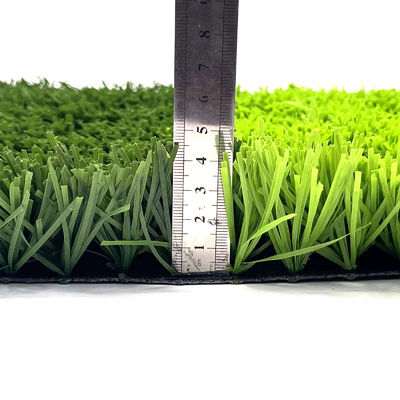
The original MAX reference identifies PE football fibres. Colour, pile and density are selected with the infill so the finished surface has a defined construction and appearance.
The grass does not need mowing or reseeding, but the field still benefits from regular brushing, debris removal and inspection. In an infilled system, maintaining the material distribution is part of looking after the pitch.
For a busy venue, set the maintenance plan around the hours of use and the spots that receive the most play.


The original construction diagram shows the fibres supported by base fabrics, mesh and latex. Beneath the carpet, the base, water route and any specified underlayer form the rest of the installation.
Seams, edges, infill and field markings are coordinated with the pitch drawing. If the project requires formal acceptance tests, identify the proposed construction and field tests in the brief.
| Brand / model | USAWEGI / MAX |
|---|---|
| Primary use | Artificial football pitches and sports venues |
| Carpet material reference | PE football fibres with selected backing construction |
| Infill | Rubber performance infill with the specified stabilising material |
| Pile and density | Selected against the sample, infill and use requirements |
| Supporting construction | Base, water route and any specified underlayer identified for the project |
| Performance requirements | Defined for the selected carpet-and-installation system |
Prepare the base and water routes, position the rolls and complete the seams and markings to the field plan. Add the specified infill using the agreed materials and installation method, then groom and inspect the surface.
Infill quantities, the exposed fibre length and the required field checks belong with the chosen configuration. The local team follows the material instructions and project handover requirements.

USAWEGI can discuss carpet samples, infill, joining supplies and associated items for the quotation. The order identifies selected materials, quantities, protective packing and destination.
Keep the approved sample and component references with the order. They help the installation and maintenance teams work with the same construction.


Remove debris, brush the fibres and inspect seams and edges. Review infill distribution and the heavily used goalmouths, entrances and training spots.
Keep water outlets open and use compatible replacement material. The care programme is adjusted to the actual use, weather and surface condition.
The measured response belongs to the complete selected construction, including carpet, infill and any specified supporting layer.
No. Brushing, debris removal, seam inspection and infill care remain part of operating the field.
Yes. Include the requested system materials and quantities with the pitch drawing and intended use.
Country, field dimensions or drawing, playing programme, base photographs and required performance tests.
|
|
| MOQ: | 1000 square meters |
| Price: | negotiable |
| Standard Packaging: | barrrel |
| Delivery Period: | within 15 days after balance |
| Payment Method: | D/A,D/P,T/T,L/C, |
| Supply Capacity: | 30000 square 2 weeks |
Bring dense football grass and a defined rubber-infill system to the same pitch proposal.

A regularly used football venue needs more than a green carpet. The grass, stabilising material and performance infill are selected together to form the playing surface.
This MAX option pairs the carpet choice with rubber infill, with the aim of a resilient football system and a practical maintenance routine for clubs, schools and sports grounds.
Discuss a Rubber-Infill Football SystemIn a sand-and-rubber configuration, the stabilising sand and rubber performance infill occupy the space between the grass fibres. The selected infill supports the carpet arrangement and contributes to the installed system's response under play.

The proposed material types, grading and quantities are identified with the carpet. Shock absorption is assessed for the defined system, including any specified underlayer and supporting construction.
That makes the carpet-and-infill sample a more useful comparison than choosing turf by appearance alone.
The original MAX reference identifies PE football fibres. Colour, pile and density are selected with the infill so the finished surface has a defined construction and appearance.
The grass does not need mowing or reseeding, but the field still benefits from regular brushing, debris removal and inspection. In an infilled system, maintaining the material distribution is part of looking after the pitch.
For a busy venue, set the maintenance plan around the hours of use and the spots that receive the most play.


The original construction diagram shows the fibres supported by base fabrics, mesh and latex. Beneath the carpet, the base, water route and any specified underlayer form the rest of the installation.
Seams, edges, infill and field markings are coordinated with the pitch drawing. If the project requires formal acceptance tests, identify the proposed construction and field tests in the brief.
| Brand / model | USAWEGI / MAX |
|---|---|
| Primary use | Artificial football pitches and sports venues |
| Carpet material reference | PE football fibres with selected backing construction |
| Infill | Rubber performance infill with the specified stabilising material |
| Pile and density | Selected against the sample, infill and use requirements |
| Supporting construction | Base, water route and any specified underlayer identified for the project |
| Performance requirements | Defined for the selected carpet-and-installation system |
Prepare the base and water routes, position the rolls and complete the seams and markings to the field plan. Add the specified infill using the agreed materials and installation method, then groom and inspect the surface.
Infill quantities, the exposed fibre length and the required field checks belong with the chosen configuration. The local team follows the material instructions and project handover requirements.

USAWEGI can discuss carpet samples, infill, joining supplies and associated items for the quotation. The order identifies selected materials, quantities, protective packing and destination.
Keep the approved sample and component references with the order. They help the installation and maintenance teams work with the same construction.


Remove debris, brush the fibres and inspect seams and edges. Review infill distribution and the heavily used goalmouths, entrances and training spots.
Keep water outlets open and use compatible replacement material. The care programme is adjusted to the actual use, weather and surface condition.
The measured response belongs to the complete selected construction, including carpet, infill and any specified supporting layer.
No. Brushing, debris removal, seam inspection and infill care remain part of operating the field.
Yes. Include the requested system materials and quantities with the pitch drawing and intended use.
Country, field dimensions or drawing, playing programme, base photographs and required performance tests.