| MOQ: | 1000 square meters |
| Price: | Negotiable |
| Standard Packaging: | Rolls with protective packaging |
| Delivery Period: | 15-30 days, depending on order requirements |
| Payment Method: | T/T,L/C,Western Union |
| Supply Capacity: | 20,000 Square Meter Per Week |
Plan the athletics area with a 1.22 m wide prefabricated rubber surface. The wearing face arrives formed, ready for the installer to set out and bond over the prepared foundation.
For a school or training venue, the specified width gives the material order and roll layout a practical starting point. It helps the team calculate strips, joins and cutting around the running area.

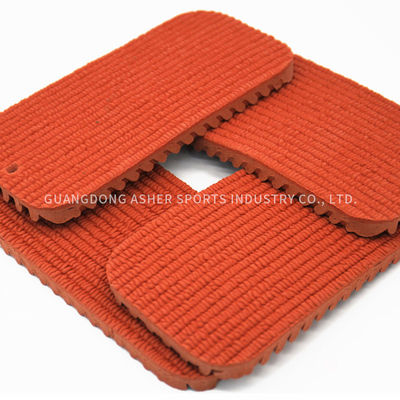
The raised surface texture is visible in a physical sample, along with the edge and underside of the rubber construction. This lets the buyer inspect the offered finish before installation begins.
Grip requirements still belong to the selected material and its applicable test conditions. Compare the sample with the intended footwear and running programme when choosing the surface.

The underside accompanies the wearing face as one manufactured rubber material. The selected adhesive forms the connection between that material and the prepared base.
A consistent installation follows the approved sample, roll direction and seam method. The installer works with the actual supplied roll format throughout the project.

The roll plan and the line-marking plan serve different purposes. Material strips are arranged for cutting and joints; sports lines are set out from the athletics drawing.
Keep bend geometry, entrances and transitions to neighbouring floors in the same plan. The listed material is 13 mm thick, with a 15 m length reference; the quotation identifies the ordered configuration.
A stable, level and compatible base supports the preformed surface. Local repairs and moisture or drainage requirements are addressed before the adhesive work.
The crew places the rolls, completes the specified bonding and seams, then marks the selected athletics layout. Curing and opening follow the chosen installation instructions.
USAWEGI can discuss roll quantities, colour selection, packing and installation guidance. The approved material sample stays with the receiving information so the contractor can compare incoming rolls with the order.
Regular care removes abrasive grit and checks edges and seams. Keep the selected rubber and adhesive references for compatible local repairs.

Is the roll width the lane-marking width? The 1.22 m dimension describes the listed material format; lane geometry is set by the project drawing.
Share the country, track dimensions, base photographs, preferred colours and required grip tests. The proposal can identify the rolls, bonding materials and quantity schedule for your running area.
Get a Prefabricated Track Proposal
|
|
| MOQ: | 1000 square meters |
| Price: | Negotiable |
| Standard Packaging: | Rolls with protective packaging |
| Delivery Period: | 15-30 days, depending on order requirements |
| Payment Method: | T/T,L/C,Western Union |
| Supply Capacity: | 20,000 Square Meter Per Week |
Plan the athletics area with a 1.22 m wide prefabricated rubber surface. The wearing face arrives formed, ready for the installer to set out and bond over the prepared foundation.
For a school or training venue, the specified width gives the material order and roll layout a practical starting point. It helps the team calculate strips, joins and cutting around the running area.

The raised surface texture is visible in a physical sample, along with the edge and underside of the rubber construction. This lets the buyer inspect the offered finish before installation begins.
Grip requirements still belong to the selected material and its applicable test conditions. Compare the sample with the intended footwear and running programme when choosing the surface.

The underside accompanies the wearing face as one manufactured rubber material. The selected adhesive forms the connection between that material and the prepared base.
A consistent installation follows the approved sample, roll direction and seam method. The installer works with the actual supplied roll format throughout the project.

The roll plan and the line-marking plan serve different purposes. Material strips are arranged for cutting and joints; sports lines are set out from the athletics drawing.
Keep bend geometry, entrances and transitions to neighbouring floors in the same plan. The listed material is 13 mm thick, with a 15 m length reference; the quotation identifies the ordered configuration.
A stable, level and compatible base supports the preformed surface. Local repairs and moisture or drainage requirements are addressed before the adhesive work.
The crew places the rolls, completes the specified bonding and seams, then marks the selected athletics layout. Curing and opening follow the chosen installation instructions.
USAWEGI can discuss roll quantities, colour selection, packing and installation guidance. The approved material sample stays with the receiving information so the contractor can compare incoming rolls with the order.
Regular care removes abrasive grit and checks edges and seams. Keep the selected rubber and adhesive references for compatible local repairs.

Is the roll width the lane-marking width? The 1.22 m dimension describes the listed material format; lane geometry is set by the project drawing.
Share the country, track dimensions, base photographs, preferred colours and required grip tests. The proposal can identify the rolls, bonding materials and quantity schedule for your running area.
Get a Prefabricated Track Proposal