| MOQ: | 1000 square meters |
| Price: | Negotiable |
| Standard Packaging: | barrrel |
| Delivery Period: | within 15 days after balance |
| Payment Method: | L/C,T/T,,Paypal,Western Union |
| Supply Capacity: | 20000 sq.m per Month |
Discuss a UV-resistant finish and a coordinated rubber build-up for a track exposed to everyday outdoor conditions.
An outdoor track has to live with daylight, changing weather and regular use. For schools, clubs and training grounds, the useful choice is a complete surface system: wearing finish, supporting rubber layers and a suitable base working together.
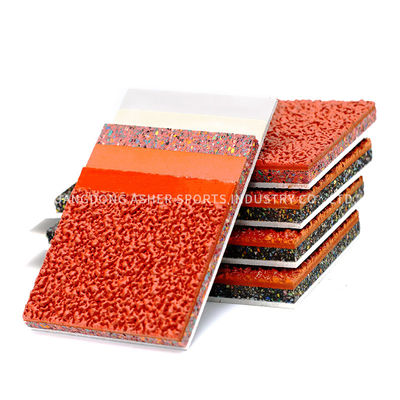
Discuss Your Outdoor TrackThe original construction reference shows a rubber base, polyurethane sealing and reinforcement layers, and an EPDM granule finish. Each part has a different role in the installed build-up.
The upper finish forms the wearing surface. The underlying rubber layer contributes the resilient structure, while the sealing and binder layers connect the specified materials into the system.
For a buyer comparing track options, that means looking at the whole build-up rather than choosing on colour alone. The selected formulation and layer schedule are identified in the project proposal.

Sun exposure can affect the appearance of polymer surfaces. For a UV-resistance requirement, the selected finish and supporting weathering information need to match the actual product offered for the outdoor site.
For schools and community venues, material information matters as well as appearance. The proposal can include the product data, handling instructions and relevant test reports required for your project.
Review the colour and finish sample with the site's exposure and intended use.
Keep the named components and their supplier information together with the system specification.
Where substance or emissions limits apply, identify the test method and the supplied formulation covered by the report.

School PE, club training and a community jogging programme can share an outdoor venue while creating different surface and maintenance needs. Activities, footwear and daily use help define the proposed system.
The supporting base and site water routes matter too. Review levels, condition and drainage before surface installation, especially when replacing an existing track.
Provide a track drawing and the intended activities so materials, markings and installation responsibilities can be included in one proposal.

| Brand / model | USAWEGI / AR-SP-01 |
|---|---|
| System | Sandwich-system running track |
| Application | Outdoor rubber running-surface projects |
| Listed nominal thickness | 10mm; final full layer build-up identified for the selected configuration |
| Construction reference | Rubber base, polyurethane layers and EPDM wearing finish |
| Area and layout | Customised to the site drawing |
| Finish and colour | Chosen against the approved sample and outdoor-use specification |
| Documentation | Material, weathering and acceptance requirements agreed for the order |
Review the supporting base, moisture, levels and water routes before selecting the installation programme.
Use the agreed materials, mixing instructions and application sequence for the chosen system.
Complete the surface and markings, inspect the work and carry out the specified acceptance checks.
Weather and curing conditions affect site work. The installation team follows the material instructions and opens the surface only after the required curing and handover steps.

USAWEGI can discuss the material package, colour, drawings and installation guidance for your project. The order identifies supplied items, packing, storage requirements and local installation responsibilities.
Keep containers and component references traceable to the agreed system. Storage, mixing and application instructions are supplied for the selected materials.
After installation, remove debris, keep water routes clear and inspect high-use areas, edges and markings. Repairs should use compatible materials so the original build-up remains understood.


No. Weathering depends on the selected formulation and exposure. Define any colour-retention or weathering-test requirement against the proposed finish.
Use material-specific test reports against the applicable substance or emissions limits. A broad product description does not establish every formulation's test result.
No. Different configurations have different layer schedules. The current listing states 10mm, and the final full build-up needs to be identified in the project quotation.
The condition and compatibility of the existing surface and base need assessment before an overlay or replacement method is chosen.
Country, track area or drawing, activities, base photographs, preferred colour and required material or field tests.
Send your layout and outdoor-use requirements for a coordinated sandwich-track material and supply proposal.
Request a Sandwich Track Proposal
|
|
| MOQ: | 1000 square meters |
| Price: | Negotiable |
| Standard Packaging: | barrrel |
| Delivery Period: | within 15 days after balance |
| Payment Method: | L/C,T/T,,Paypal,Western Union |
| Supply Capacity: | 20000 sq.m per Month |
Discuss a UV-resistant finish and a coordinated rubber build-up for a track exposed to everyday outdoor conditions.
An outdoor track has to live with daylight, changing weather and regular use. For schools, clubs and training grounds, the useful choice is a complete surface system: wearing finish, supporting rubber layers and a suitable base working together.
Discuss Your Outdoor TrackThe original construction reference shows a rubber base, polyurethane sealing and reinforcement layers, and an EPDM granule finish. Each part has a different role in the installed build-up.
The upper finish forms the wearing surface. The underlying rubber layer contributes the resilient structure, while the sealing and binder layers connect the specified materials into the system.
For a buyer comparing track options, that means looking at the whole build-up rather than choosing on colour alone. The selected formulation and layer schedule are identified in the project proposal.

Sun exposure can affect the appearance of polymer surfaces. For a UV-resistance requirement, the selected finish and supporting weathering information need to match the actual product offered for the outdoor site.
For schools and community venues, material information matters as well as appearance. The proposal can include the product data, handling instructions and relevant test reports required for your project.
Review the colour and finish sample with the site's exposure and intended use.
Keep the named components and their supplier information together with the system specification.
Where substance or emissions limits apply, identify the test method and the supplied formulation covered by the report.

School PE, club training and a community jogging programme can share an outdoor venue while creating different surface and maintenance needs. Activities, footwear and daily use help define the proposed system.
The supporting base and site water routes matter too. Review levels, condition and drainage before surface installation, especially when replacing an existing track.
Provide a track drawing and the intended activities so materials, markings and installation responsibilities can be included in one proposal.

| Brand / model | USAWEGI / AR-SP-01 |
|---|---|
| System | Sandwich-system running track |
| Application | Outdoor rubber running-surface projects |
| Listed nominal thickness | 10mm; final full layer build-up identified for the selected configuration |
| Construction reference | Rubber base, polyurethane layers and EPDM wearing finish |
| Area and layout | Customised to the site drawing |
| Finish and colour | Chosen against the approved sample and outdoor-use specification |
| Documentation | Material, weathering and acceptance requirements agreed for the order |
Review the supporting base, moisture, levels and water routes before selecting the installation programme.
Use the agreed materials, mixing instructions and application sequence for the chosen system.
Complete the surface and markings, inspect the work and carry out the specified acceptance checks.
Weather and curing conditions affect site work. The installation team follows the material instructions and opens the surface only after the required curing and handover steps.

USAWEGI can discuss the material package, colour, drawings and installation guidance for your project. The order identifies supplied items, packing, storage requirements and local installation responsibilities.
Keep containers and component references traceable to the agreed system. Storage, mixing and application instructions are supplied for the selected materials.
After installation, remove debris, keep water routes clear and inspect high-use areas, edges and markings. Repairs should use compatible materials so the original build-up remains understood.


No. Weathering depends on the selected formulation and exposure. Define any colour-retention or weathering-test requirement against the proposed finish.
Use material-specific test reports against the applicable substance or emissions limits. A broad product description does not establish every formulation's test result.
No. Different configurations have different layer schedules. The current listing states 10mm, and the final full build-up needs to be identified in the project quotation.
The condition and compatibility of the existing surface and base need assessment before an overlay or replacement method is chosen.
Country, track area or drawing, activities, base photographs, preferred colour and required material or field tests.
Send your layout and outdoor-use requirements for a coordinated sandwich-track material and supply proposal.
Request a Sandwich Track Proposal