| MOQ: | 1000 square meters |
| Price: | Negotiable |
| Standard Packaging: | Protective containers for the selected material package |
| Delivery Period: | Confirmed in the quotation for the order |

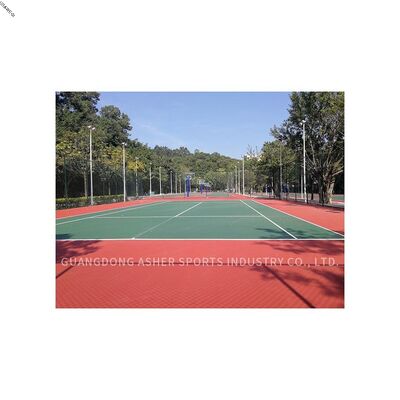
An outdoor tennis court can lose colour and texture while still having a usable supporting base. The AR-TB01B acrylic material range provides a starting point for a resurfacing coating proposal, with the selected build-up matched to the condition of the old court.
For a club or resurfacing contractor, the aim is a coherent new playing finish and clear markings. Surface preparation and compatible coats belong in the material package, rather than being left as assumptions between separate suppliers.
Faded colour, local wear and ingrained dirt are different from moving cracks, settlement and persistent low spots. A new acrylic finish follows the substrate; it cannot turn a moving or poorly drained base into a sound one.
Record cracks and loose coating, check the adhesion of retained layers and identify repairs before calculating the coating requirement. For uncertain old materials, a prepared trial area can help assess compatibility.

Acrylic resurfacing is a sequence of compatible preparation and coating steps. Texture depends on the proposed materials, aggregate and application method, not simply the colour in the final pail.
Agree the surface finish against a sample and the tennis-use brief. A firmer hard-court construction and an elastic build-up should be compared as different configurations; the word acrylic alone does not establish cushioning or a particular ball-speed category.

Distinguish the playing rectangle, run-off and line markings before materials are ordered. Where a court also hosts another sport, agree which markings have priority so the finished layout remains understandable.
Match colour with a physical sample where appearance matters. A screen image cannot guarantee the result beside an older court. Retain batch information and some compatible material for later small repairs.
Clean and prepare the base, complete agreed repairs and follow the selected product instructions for coats and curing. A forecast alone does not confirm substrate readiness; the installer checks actual site conditions.
Keep foot traffic and equipment off fresh work until the specified conditions for the next operation or reopening are met. A uniform promised cure time would ignore temperature, moisture and the selected materials.
| Brand | USAWEGI |
|---|---|
| Model reference | AR-TB01B |
| Construction | Selected for the agreed project and approved material sample |
Can this coat cover active cracks? Moving cracks need a suitable repair and design response; resurfacing colour is not a structural remedy.
What does the quotation need? Send court dimensions, photographs, old surface type, repairs, colour layout and destination. USAWEGI can discuss the AR-TB01B selection, quantities, packing and installation guidance for the agreed resurfacing work.