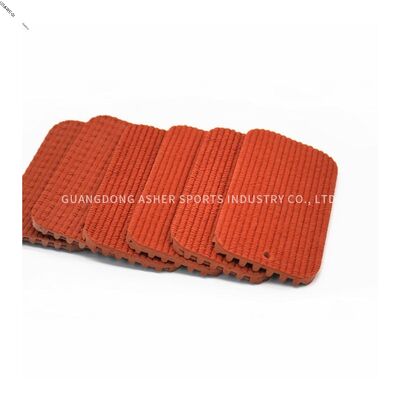
| MOQ: | 1000 square meters |
| Price: | Negotiable |
| Standard Packaging: | Rolls with protective export wrapping |
| Delivery Period: | Confirmed in the quotation for the order |
For a contractor replacing worn running lanes, factory-formed rubber rolls create a different installation task from a fully site-mixed surface. The AR-SP-02 reference lists 13 mm thickness, 1.22 m width and a 15 m or agreed customised length.
This page addresses material ordering and the adhesive-and-seam work that joins the rolls to a suitable base. It does not promise that old lanes can be replaced without investigating the supporting construction.

Nominal roll width does not decide the final athletics geometry. Prepare the cutting and seam layout around straights, bends and the intended markings before setting the order quantities.
Allow for practical cutting and keep batch references with the layout. When part of an old track remains, compare height, texture and colour at the proposed transition; an exact match to a weathered surface should not be promised from a photograph.

A prefabricated rubber surface is bonded using the specified installation system. The roll underside, adhesive and base preparation need to work together. Adhesive quantity and method are selected for the actual product and substrate.
Before bonding, check flatness, soundness, moisture and cleanliness. An unprepared low spot or unsuitable adhesive can leave local movement or loss of contact that cannot be corrected by repainting lane lines.

Condition and lay out the rolls as required by the selected instructions, then control fitting, bonding and consolidation. Keep joints clean and aligned, with the agreed detail at boundaries and adjoining surfaces.
Complete markings and inspection after the installed material is ready. A universal installation-time claim would overlook base repairs, weather, access and adhesive conditions; use the actual project programme.
Retain the model, roll dimensions, batch information and approved colour sample after handover. Compatible spare material can help the venue explain a later local repair without guessing which rubber construction was supplied.
The range uses a 10-year service-life planning reference. Wear, exposure, bonding and care influence actual condition; warranty terms are stated separately. Where athletics or fire-performance evidence is required, request the documents for the selected construction and venue use.

| Brand | USAWEGI |
|---|---|
| Model reference | AR-SP-02 |
| Nominal thickness | 13 mm |
| Nominal roll width | 1.22 m |
| Nominal roll length | 15 m or agreed customised length |
Can this be loose laid? Do not assume a bonded running-track roll is suitable for loose laying; follow the confirmed installation system.
Send the lane drawing, replacement area, base photographs, retained-surface details and destination. USAWEGI can discuss the AR-SP-02 roll schedule, adhesive requirements, packing and installation guidance for the proposed replacement work.